
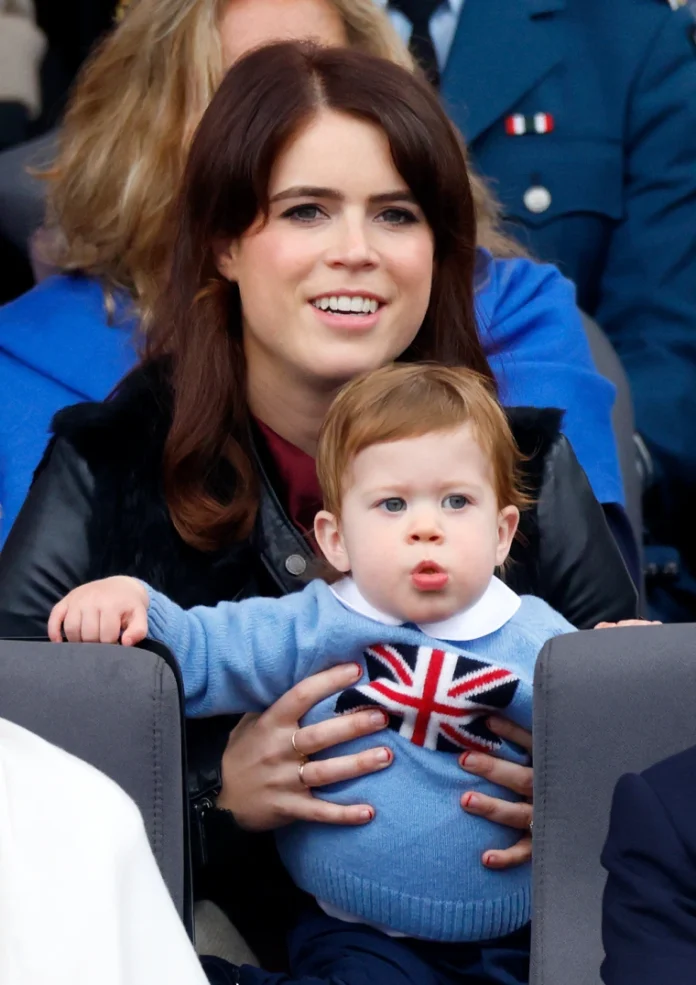

Princess Eugenie children news examines how the twelfth in line to the throne manages public visibility for two young sons while advocating for activist parenting philosophies that position childhood as a training ground for climate engagement. The younger daughter of Prince Andrew operates with slightly more media accessibility than her sister, creating distinct patterns in how she frames family milestones and integrates charitable mission messaging into parenting narratives.
This territory explores the intersection of royal family expansion, environmental activism framing, and strategic social media deployment for controlled narrative construction.
Activist Parenting Frameworks And Their Reputational Risk Calculus
Princess Eugenie has publicly committed to raising her eldest son as an environmental activist from age two, creating a documented expectation around the child’s future public positioning. This approach represents a departure from traditional royal parenting narratives that emphasized duty and service without specific ideological framing.
The reputational risk here involves prematurely defining a child’s public identity before they can consent to or resist that framing. Activist parenting narratives in high-profile contexts can backfire if the child later rejects the assigned mission or if advocacy positions become politically contentious.
Look, the bottom line is that attaching children to specific causes generates immediate media interest but constrains future flexibility. Once Eugenie established her son as a climate-focused future activist, any family decisions that contradict environmental values face heightened scrutiny and accusations of hypocrisy.
Social Media Control Versus Traditional Palace Communications
Eugenie deploys Instagram as her primary announcement vehicle, bypassing traditional palace statement protocols for family news. This creates a direct-to-audience channel that allows for emotional framing, visual storytelling, and immediate public response monitoring without institutional mediation.
The strategic advantage involves timing control and message framing autonomy. Palace statements follow rigid formats and approval chains, while personal social media accounts allow for spontaneous announcements timed to family preferences rather than institutional calendars.
What I’ve seen work in this context is selective platform use where major announcements still receive palace confirmation while supplementary content lives exclusively on personal channels. This maintains institutional legitimacy while building direct audience relationships that don’t depend on palace infrastructure.
Birth Spacing And Strategic Family Completion Narratives
The two sons arrived roughly two years apart, following a common spacing pattern that balances parental capacity with sibling relationship development. Royal families historically favored shorter spacing to produce multiple heirs quickly, but modern preferences emphasize parental wellbeing and individual child attention.
The second pregnancy announcement utilized existing family imagery, with the older son positioned as an active participant in the pregnancy revelation. This framing emphasized sibling integration and family unit cohesion rather than focusing exclusively on the incoming child.
From a practical standpoint, birth spacing decisions in royal contexts carry succession implications even when positions are relatively distant from the throne. Each child represents a future succession line branch, and spacing affects how those lines develop relative to other royal family branches.
Name Selection As Heritage Signaling And Identity Anchoring
Both sons carry names with deep royal and family history connections, with the eldest incorporating Philip as a middle name honoring the late Duke of Edinburgh. The younger son’s name includes Ronnie, honoring Eugenie’s grandfather on her mother’s side, demonstrating balanced heritage acknowledgment across both family lines.
Naming strategies in royal contexts function as public heritage statements that signal which family connections receive priority acknowledgment. Including both paternal royal names and maternal family names creates balance but also complexity in how children understand their own identity positioning.
The reality is that royal children with multiple historically significant names face ongoing pressure to embody or honor those legacies. Each name carries expectations and comparison frameworks that shape both public perception and internal family dynamics around individual identity development.
Title Decisions And Future Working Royal Probability Assessment
Eugenie’s sons do not automatically receive prince titles despite their position as Queen Elizabeth’s great-grandchildren, creating a parallel situation to other royal children born to non-working royal parents. This reflects evolving palace policies around title proliferation and working royal designation.
The strategic calculation involves preserving optionality while avoiding the burden of unwanted formality. Titles create public expectations around behavior, appearance frequency, and institutional loyalty that may not align with family preferences for relative privacy and career flexibility.
Here’s what the data tells us about title decisions in modern royal contexts. Families increasingly defer title use even when technically eligible, recognizing that aristocratic styling without corresponding institutional roles creates confusion and can appear pretentious in democratic societies.