
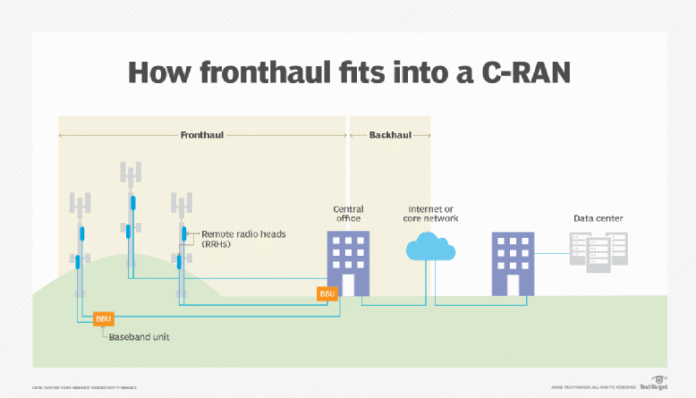

In my 15 years leading teams in telecommunications, I’ve seen the backhaul network architecture evolve from a simple point-to-point connection to a complex, multi-layered infrastructure critical to network performance. The backhaul network connects cell sites to the core network, acting as the backbone for modern mobile and broadband communications. Designing this infrastructure requires balancing cost, scalability, and resilience while ensuring high data throughput and low latency. The practical realities of site limitations, budget constraints, and future-proofing make it a real challenge beyond textbook theory.
Backhaul network architecture infrastructure
Backhaul network architecture infrastructure design and layout must address several core elements, including transport technologies, topology types, and traffic management strategies. Fibre optic cables are usually the preferred medium due to their high capacity, but microwave links are common in areas where laying fibre is impractical or cost-prohibitive. From a layout standpoint, hierarchical designs that separate access, distribution, and core layers provide flexibility and scalability. What I’ve learned is that adopting a modular design framework helps accommodate planned growth; for example, implementing a ring topology enhances network resiliency in case of fibre cuts or hardware failures. The bottom line is a robust architecture must anticipate next-generation network demands and evolving traffic patterns, especially with 5G and edge computing starting to dominate.
Backhaul networks must be agile
Given market cycles and the arrival of small cells, the evolution of backhaul networks must be agile. Small cells require dense backhaul infrastructure, and I’ve learned that wireless millimetre-wave (mmWave) backhaul can be a cost-effective answer, despite weather sensitivity challenges. Designing for modular expansion, with distributed routing and switching at edge nodes, reduces bottlenecks and supports future technology upgrades without massive overhauls. We tried loading too many base stations on a single backhaul link once, and it backfired because capacity didn’t scale as expected, causing severe quality degradation. What works is designing with clear scalability thresholds and redoing bandwidth calculations whenever new sites are added.
FAQs
What is backhaul network architecture?
Backhaul network architecture is the design of the infrastructure that connects cell sites to the core network, enabling data transport across the mobile or broadband network.
Why is infrastructure design important in backhaul networks?
Proper infrastructure design ensures network reliability, scalability, and low latency, which are critical for meeting increasing data demands.
What are common backhaul transport methods?
Fibre optic cables and microwave links are typical, with hybrid solutions combining both to optimize cost and performance.
How do topology choices affect backhaul network layout?
Topologies like ring, mesh, or star impact network resilience, scalability, and traffic management capabilities.
What role does timing and synchronization play in backhaul design?
Timing protocols like PTP ensure low latency and support technologies like LTE and 5G that require precise packet timing.
How does security integrate into backhaul infrastructure?
Security features such as IPsec gateways protect data integrity and privacy between cell sites and the core network.
What challenges arise when scaling backhaul networks?
Scaling can be limited by physical site constraints, bandwidth caps, and cost; careful traffic analysis helps avoid overload.
Why is hybrid backhaul architecture favored?
It blends fibre’s capacity with microwave’s flexibility, balancing cost-effectiveness and performance.
How do small cells impact backhaul design?
Small cells require dense backhaul deployment, often leveraging wireless mmWave for high-capacity short-range links.
What operational practices improve backhaul network performance?
Continuous monitoring, adaptive routing, and modular design allow networks to remain flexible and resilient as demands evolve.